
Almost-Monthly Blogs ⟡ Join the Newsletter ⟡ Free PDFs
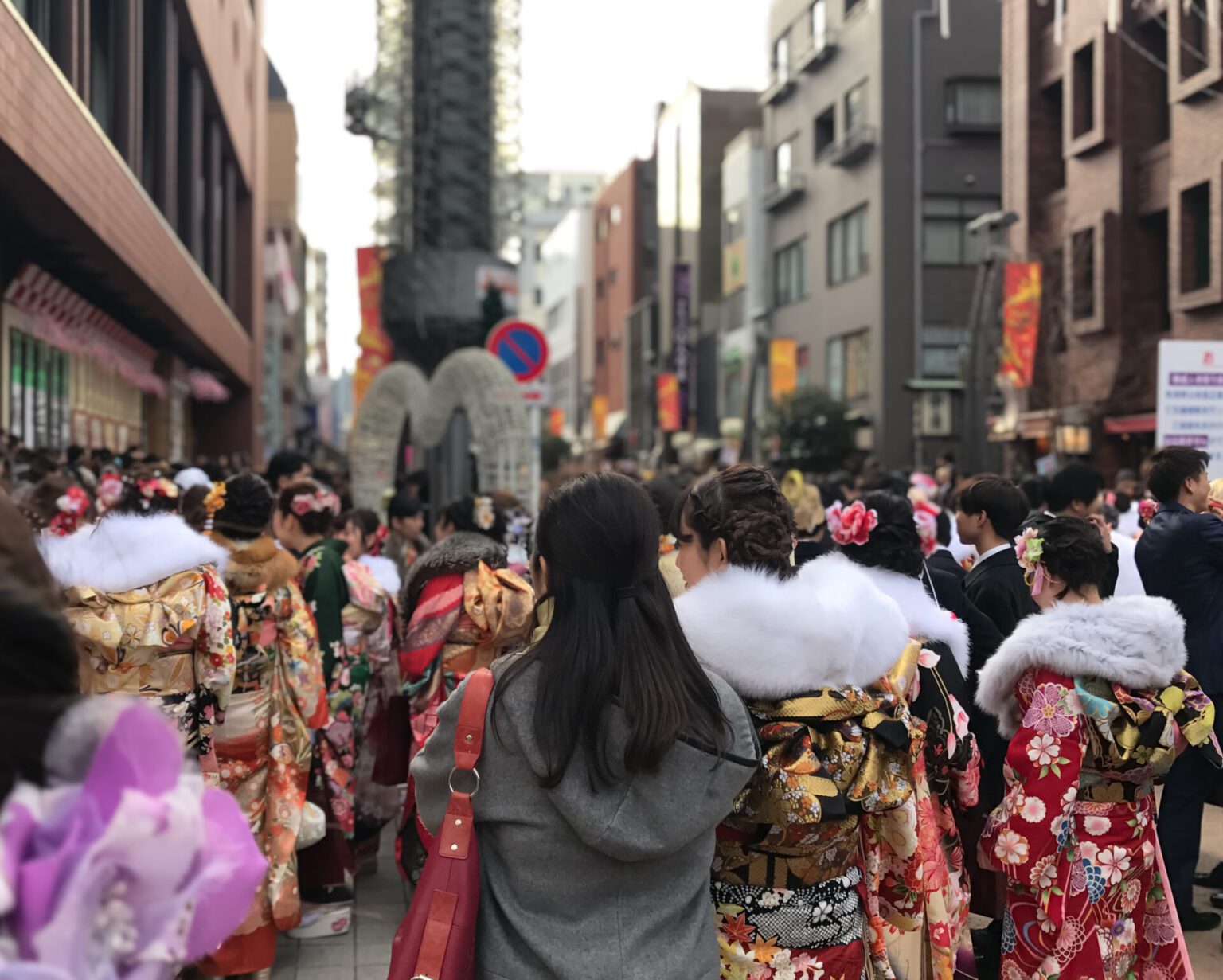

On the second Monday of January each year, thousands of 18 to 20-year-olds gather for Coming of Age Day in Japan.
It’s a day that celebrates those who reached the age of majority the previous year, where participants gather at their city hall to listen to speeches and receive information about becoming an adult in Japanese society.
Though the holiday has undergone changes in recent years, it is still a widely respected and celebrated tradition.
The Coming of Age Ceremony in Japan

In 2022, the age of majority in Japan was lowered from 20 to 18. Therefore, Coming of Age Day, 成人の日 (Seijin no Hi) has come to encompass a much larger range of new adults.
Adults ranging from 18 to 20 can participate in the yearly event, as long as their birthday falls within April 2nd of the previous year to April 1st of the current year. Tricky, I know.
Some municipalities have adjusted their ceremonies to include “20th Year Gatherings” (hatachi no tsudoi) just for 20-year-olds, since it used to be the age of majority.
Those who turned 20 are allowed access to drinking, smoking, and gambling. 18-year-olds get to… vote. And say that they’re legally adults. Fun.
In any case, these ceremonies may include speeches, performances, and a goodie bag full of “how-to-adult” manuals. And of course, a celebration afterwards with friends and family.
Traditional wear for this event would typically be lavish kimonos and stylish suits. While some people can wear kimono passed down through generations, many people just rent them.
Our Coming of Age Ceremony

For me, the new year conjures up memories not only of Ringing the Bell at Zojoji Temple, but of Coming of Age Day.
In our case, the age of majority was still 20, and we were lucky to participate in the Coming of Age Ceremony (成人式 seijin shiki) during our study-abroad experience. We attended the event in Taito Ward, which encompasses both the Asakusa and Ueno areas.
Since we had registered as residents during our exchange, we were invited, like any other 20-year-old, to attend the event.
I can remember rushing through the streets to make it to the hall, nerves electric with excitement.
Plus it was a brisk day, and our feet were freezing after putting on the geta sandals (下駄). Yet the feeling was so worth it. Men and women attending the ceremony were packed into the streets of Asakusa as we made our way there.
A few local photographers even snapped a few photos of us foreigners.
Even after all of the excitement of walking to the venue, entering the hall still felt exciting. Music played as we filed into the community center and waited for the ceremony to begin.
I’ll never forget they played Sakanaction’s “Shin Takarajima”, a song and band I was introduced to just that year, which felt perfect for the occasion.
Once the ceremony began, the emcees gave speeches about how entering adulthood is something to cherish, and emphasized the importance of living smartly, kindly, and healthily. And they even featured a performance by a diabolo player to raise the excitement!
The ceremony was conducted completely in Japanese, of course. While I picked up on the key factors, there were doubtless things I missed. But the experience and joy I felt about being included were all that mattered.
After the ceremony, we took photos and enjoyed wearing the kimonos, though the January air was quite chilly. I wish I had one of the furry shawls many of the other women sported during the event!
Renting Kimono for the Occasion

Since we had to register our residence at the city hall when we moved in, we were automatically invited to the ceremony.
However, renting the kimonos was a personal choice we made for the occasion. It was my first time wearing a kimono, and while it’s admittedly not the most comfortable get-up, they are beautiful.
To rent a kimono, you can call or book online in advance, and just be sure to show up on time, and for that matter, return it on time.
Luckily, the shop we went to was nearby in Asakusa, and the ladies working there were able to help us with our hair, too. Despite our nerves and the cold weather, we were able to make it to the venue perfectly on time.


There, everyone’s beautiful kimonos, furs, and accessories stood out in the Winter weather.
While I wouldn’t change a thing about our experience, those in the know were able to procure really gorgeous outfits for the ceremony.
Some young people, no doubt, wore antique kimonos and accessories passed down from their families, while others rented them like us.
I could tell that some of the kimonos were extremely high-quality and must have been very expensive. So if, like us, you don’t have a relative’s kimono to borrow, you can just rent.
Thoughts on the Ceremony

While I think the provided materials on becoming an adult, ranging from topics like how to be a considerate neighbor, manage money, and sex education, came a bit late, I did appreciate that they put it together at all. Imagine getting a manual on adulthood in the US!
I love that the Coming of Age holiday and ceremony places such importance on becoming an adult. It gives everyone the chance to feel the weight of coming of age, along with the newfound freedoms it offers.
Plus, it gives people a chance to mingle and revel in the occasion, an experience I think we generally lack in the US. While some families may celebrate with a sweet 16, quinceañera, bat mitzvah, etc., it’s not the same as a nationwide holiday.
The closest I’ve come to a similar experience to this was our wedding, with all the pomp and circumstance required.
In the end, I feel honored to have participated in and been a part of the exciting energy that day. Plus, having the experience of getting ready with friends, wearing a kimono, and being a part of the experience was a blast.
Sometimes, there really is something to say for traditions and ceremonies.