Almost-Monthly Blogs ⟡ Join the Newsletter ⟡ Free PDFs
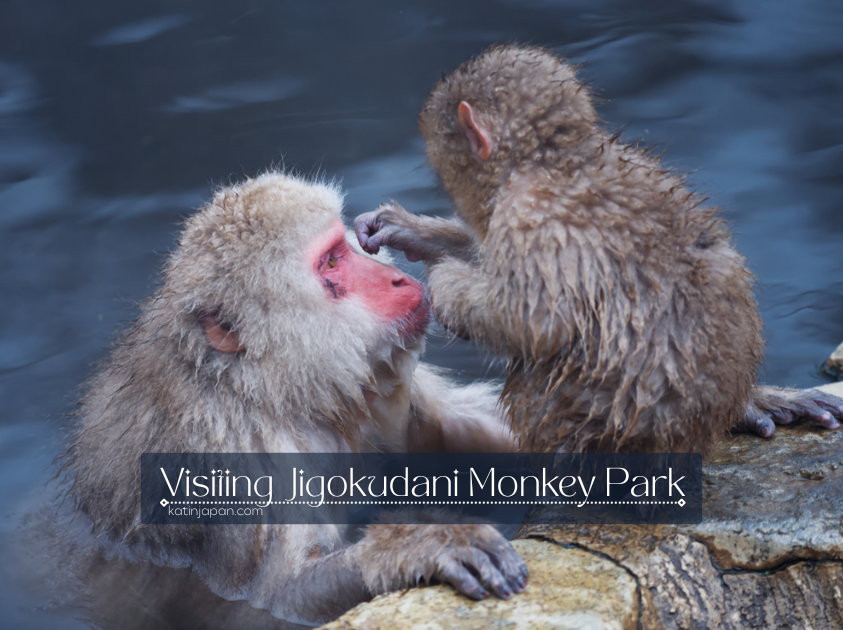

In February this year, I visited the Jigokudani Monkey Park in Nagano with my husband and our friends. We did a “bullet tour” road trip, checking out the park in a scant day.
We were lucky to see the monkeys in the onsen when we arrived, and it was definitely a unique experience. While Ramón had been to Nagano for skiing before, when they tried to see the monkeys, there were unfortunately none around that day. So, if you’re thinking of visiting, be sure to check the monkey forecast ahead of time!
Read on to learn more about visiting Jigokudani Monkey Park!
Visiting Jigokudani Monkey Park
Driving all the Way to Nagano
We set out for Nagano early in the morning, around 7 am. Since we planned to pick up our friends at Takasaki station, we decided to get breakfast in town.
Enter Kona’s Coffee. We passed by it on our way to the station and decided to get food there before our remaining 2.5-hour drive up to Nagano. They serve up Hawaiian-inspired dishes in a cosy-casual atmosphere. We were even seated on actual couches.
The portions and flavors felt very American, think IHOP. We left satisfied, with some extra cinnamon sugar donuts for our trip.
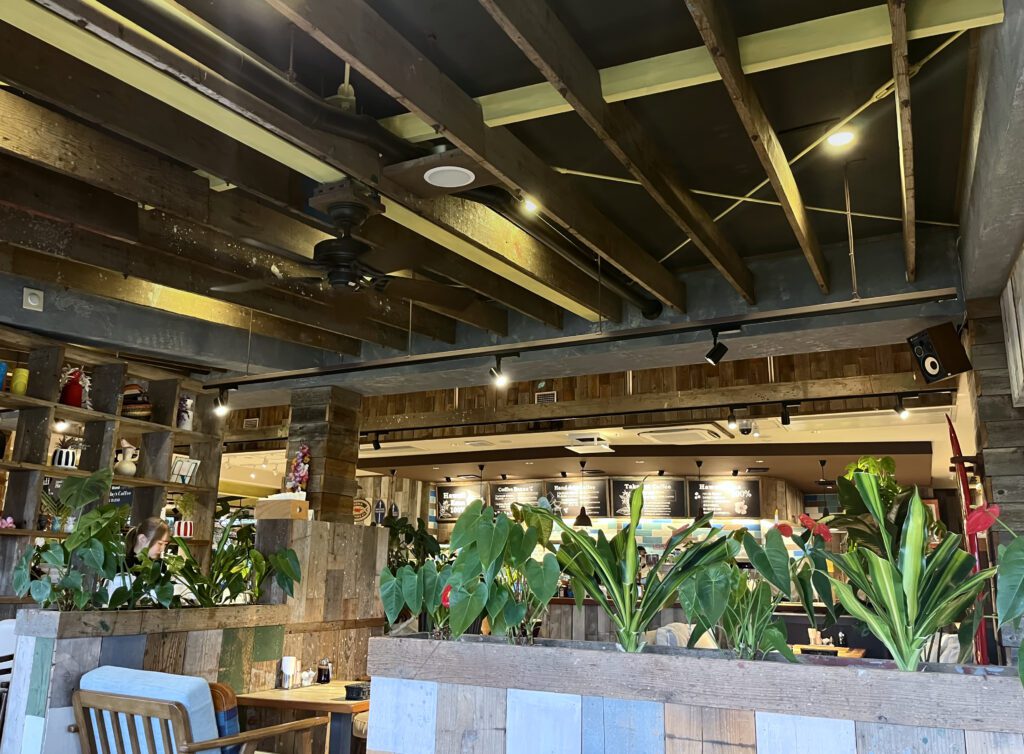
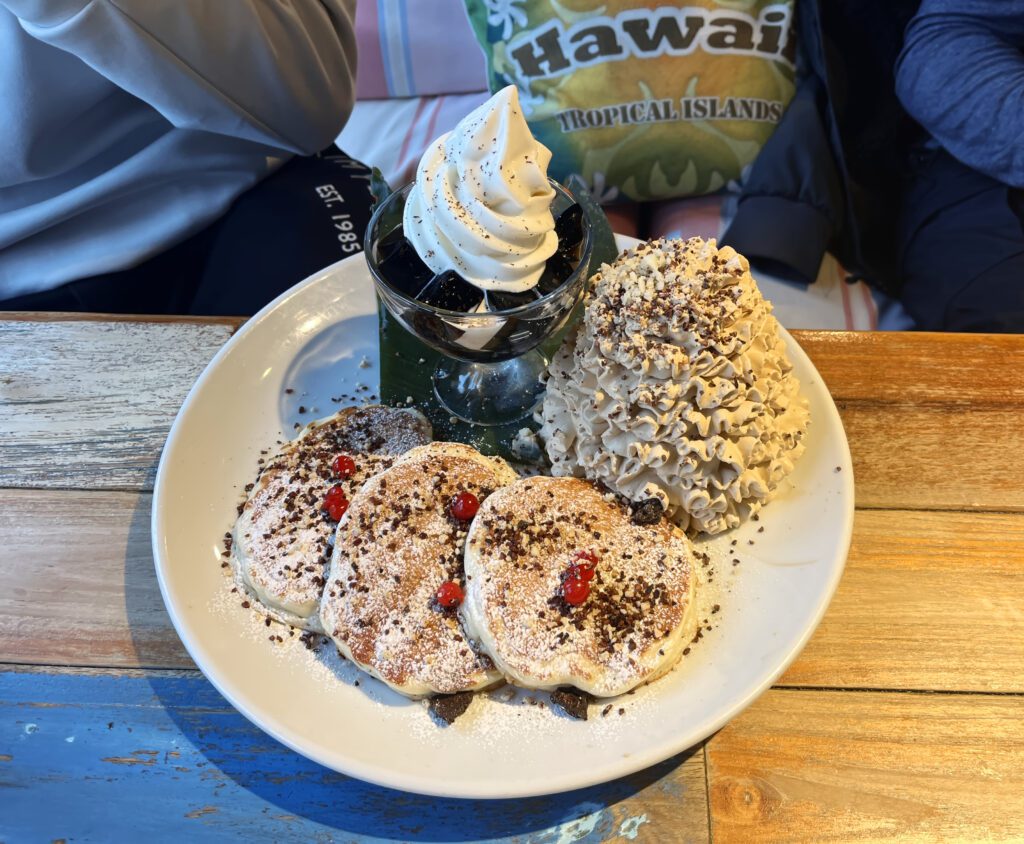
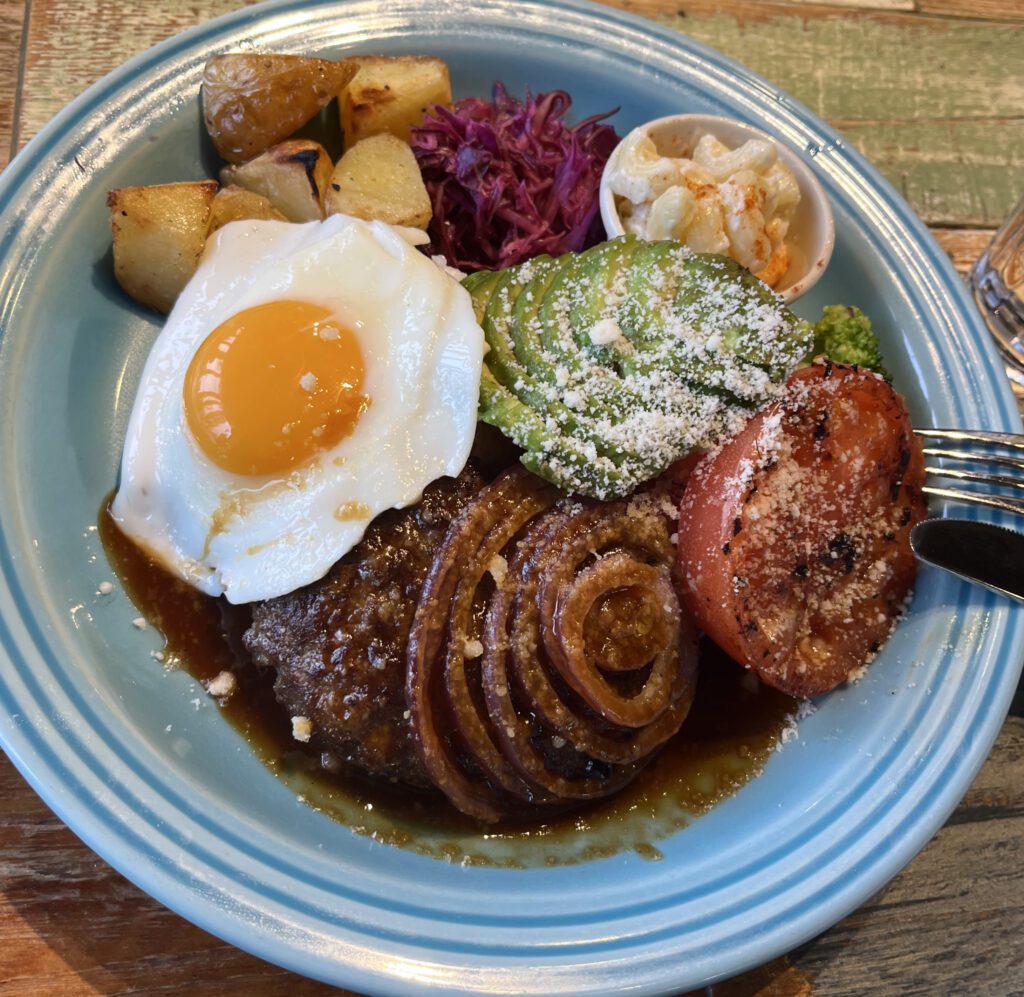
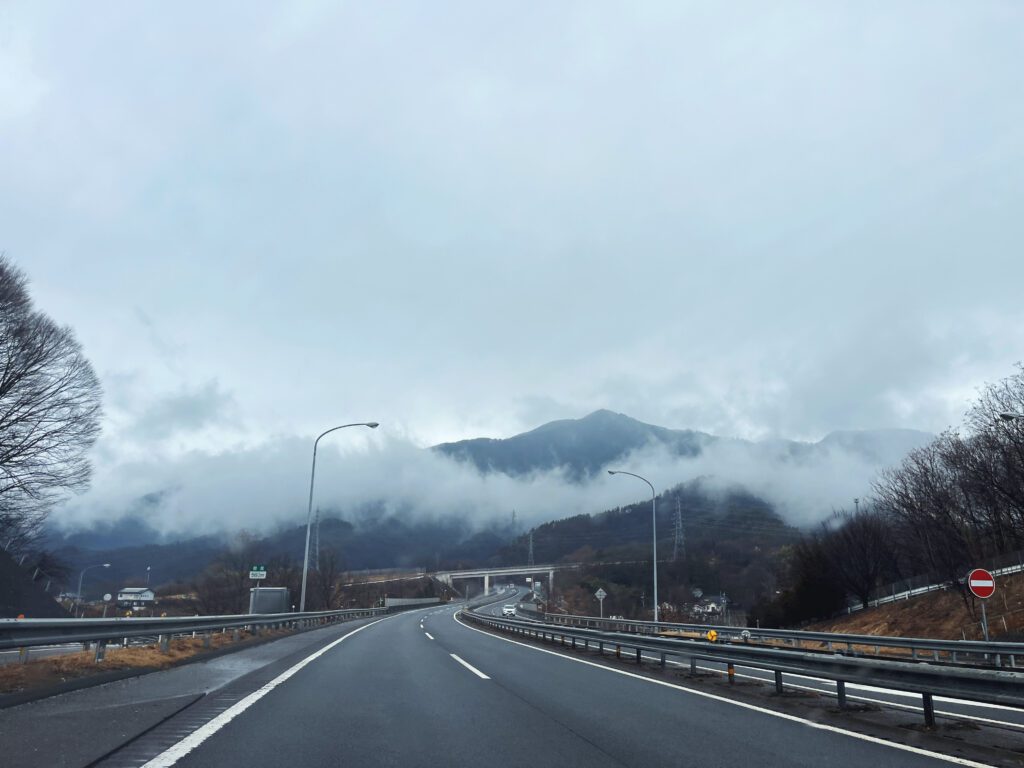
The rest of the drive passed relatively quickly. We stopped at a couple of highway rest stops along the way for snacks and bathroom breaks. Japanese rest stops are always a delight. Even the small ones are clean and well-stocked with food and souvenirs.
It was also really convenient to use our ETC card for the trip. We got lucky because a couple of the charges were discounted for the holiday, as we visited on National Foundation Day.
You can learn more about how to use and get an ETC card for tolls in Japan on my related blog: Your Guide to ETC Cards!
Finding parking
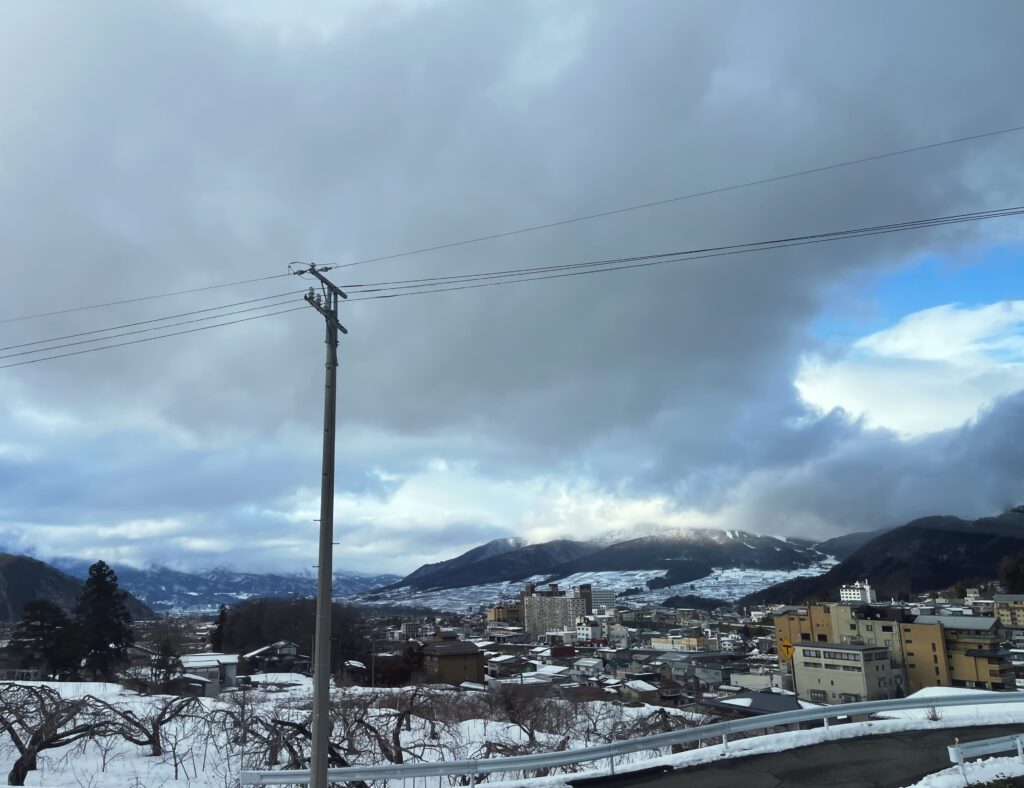
As you drive past town and up the incline, you’ll start seeing different areas with tourists and parking.
We were lucky enough to be visiting in the afternoon, so many people were already leaving in their tour buses. We even scored a free parking spot close to the entrance!
Many of the parking spaces had reasonable parking at about ¥500-¥1000, though there are some free lots.
If you take a tour bus here, parking will be no issue for you, but be careful getting back on time without slipping on the snow and ice.
Walking the Snowy Path
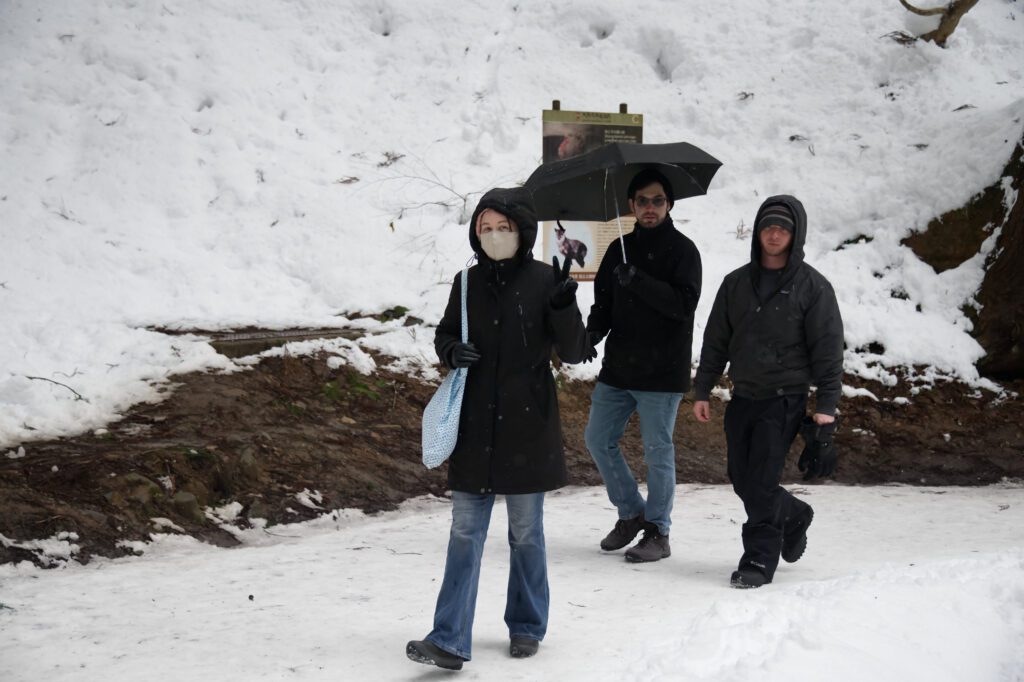
If you plan on visiting in winter, I highly recommend warm winter clothing.
For example: a waterproof or water-resistant coat with a hood, pants suitable for walking, warm underclothes, and proper boots with enough tread for snow. Umbrellas or a hat are also recommended, as it was snowing lightly the entire time we visited.
The path up the mountain to the monkeys is about a 20-30 minute walk. It’s not quite what I would consider a hike, but beware the slippery ground.
You’ll walk up to the entrance, past vendors selling cleats for your shoes, snacks, drinks, and souvenirs. Then the trek begins.
By the way, there were almost no handrails or handholds.
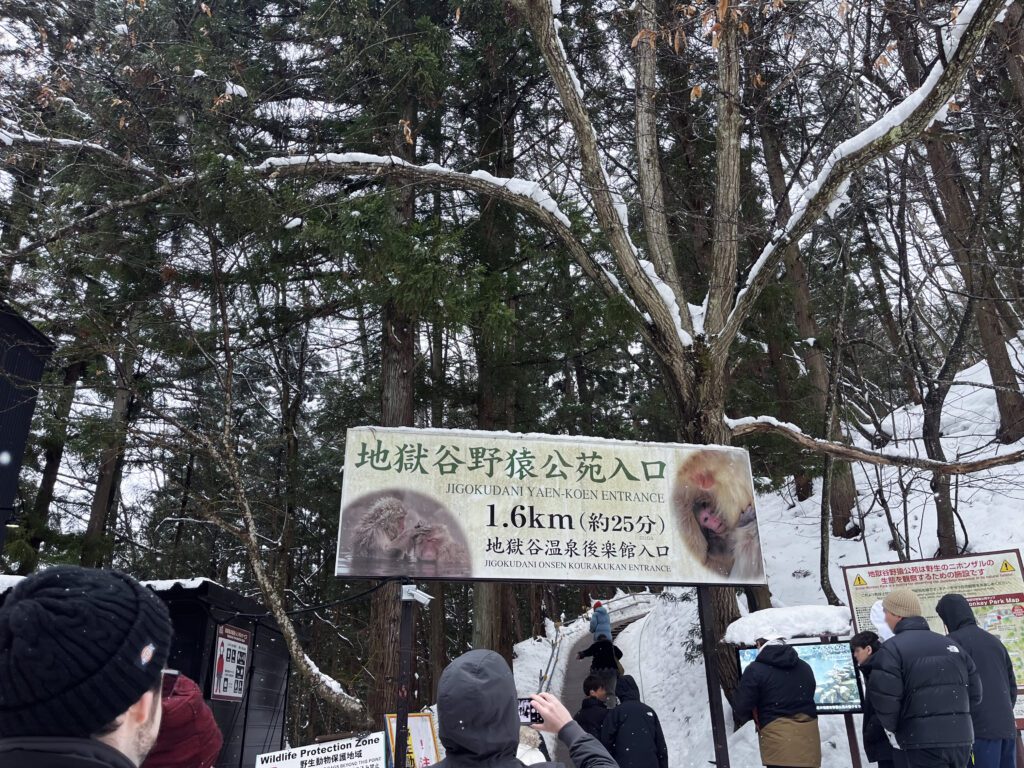
Although the walk itself wasn’t terribly long, I felt like I was about to lose my step at any moment. I wore snow boots, but the tread was barely enough to keep me upright due to the packed, slushy snow.
Ramón, Devon, and Ernesto seemed to be okay; however, your mileage may vary. And Ernesto was only wearing Vans! But either way, don’t forgo the warm clothing.
In my opinion, this isn’t a personal photo-op type of spot. The focus is on the nature and the monkeys, so don’t feel obligated to dress cutely. That said, the trees and snowy view were absolutely gorgeous.
I really enjoyed the winter scenery as we walked, though the drop off towards the trees did freak me out a little. Some snow from the abutting mountain even fell a foot away from me on our hike back. Scary!
Seeing the Monkeys in the Jigokudani Hot Spring
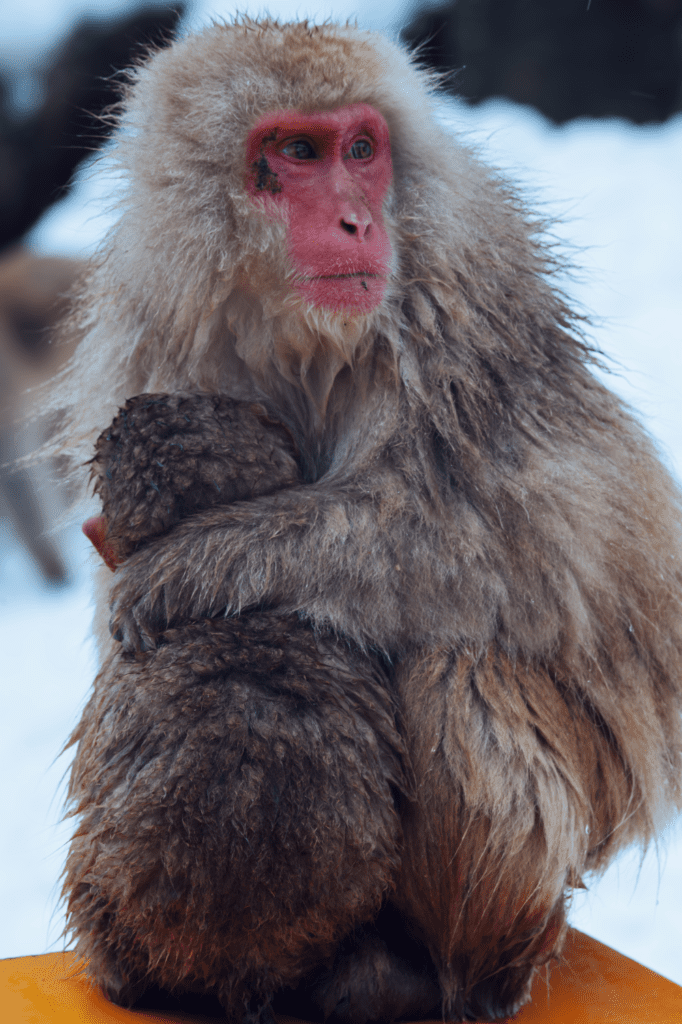
The fee to enter the actual monkey hot spring was ¥800 at the time we visited.
I was shocked that the monkeys were so friendly here. They just ran around with little care for the many tourists.
Monkeys literally ran and played not even two feet in front of us. It was clear that they’re extremely accustomed to humans.
Now, of course, there are rules when you enter the park, like don’t touch or feed the monkeys. But as long as you follow the posted rules, you’ll be fine.
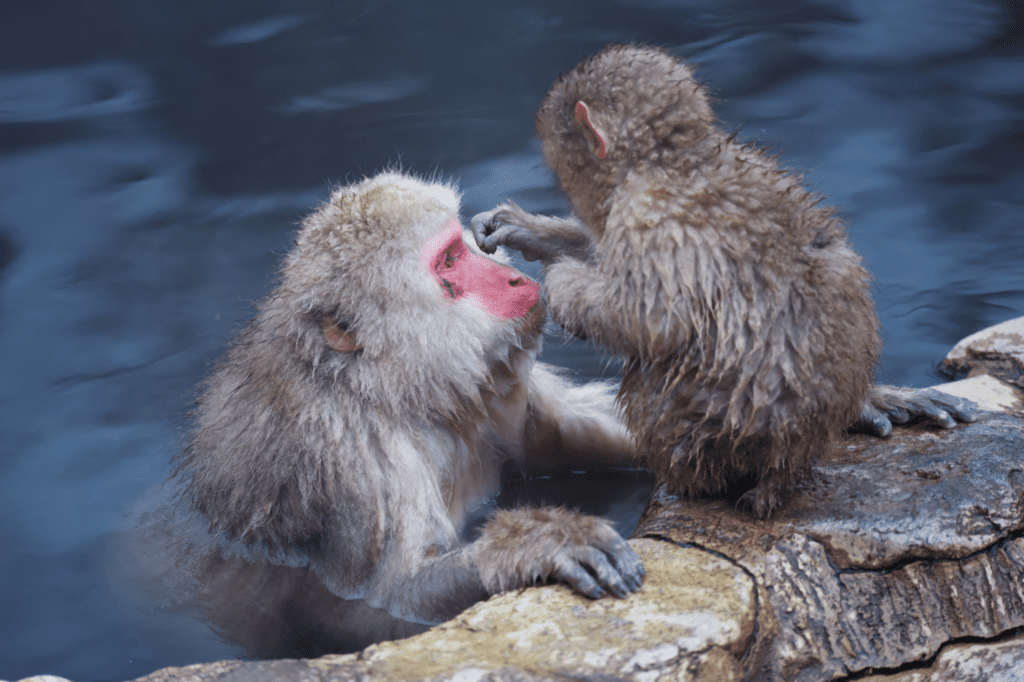
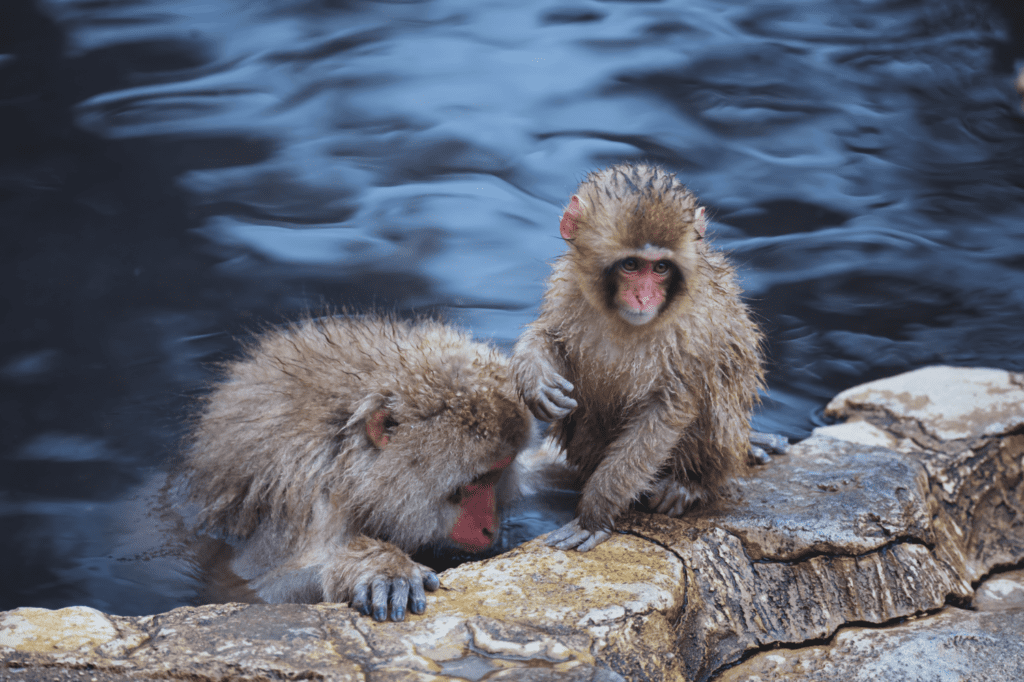
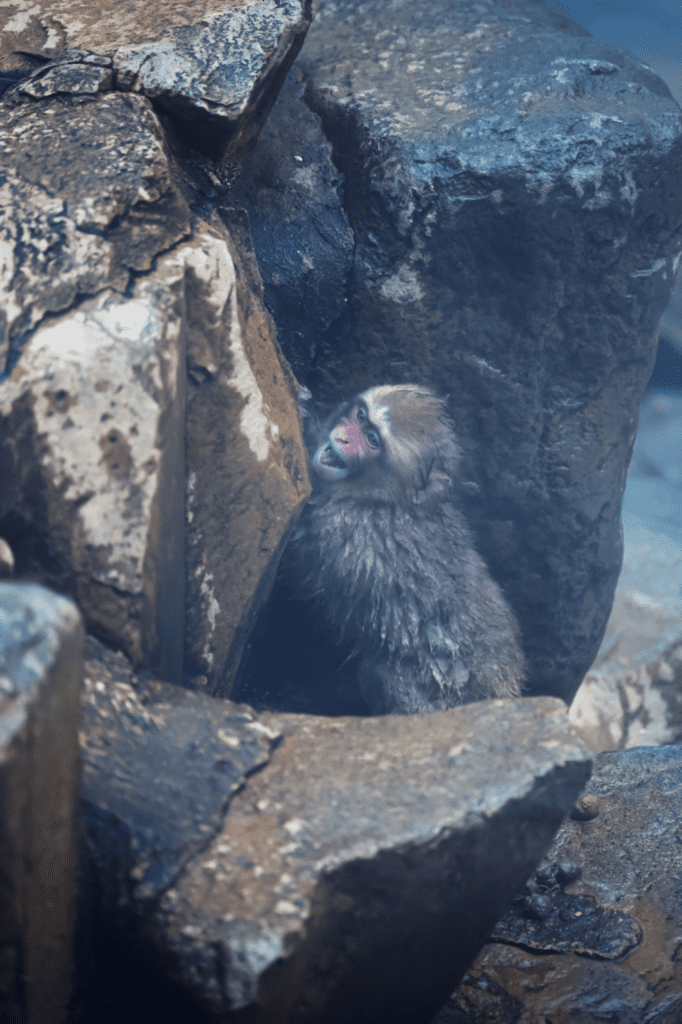
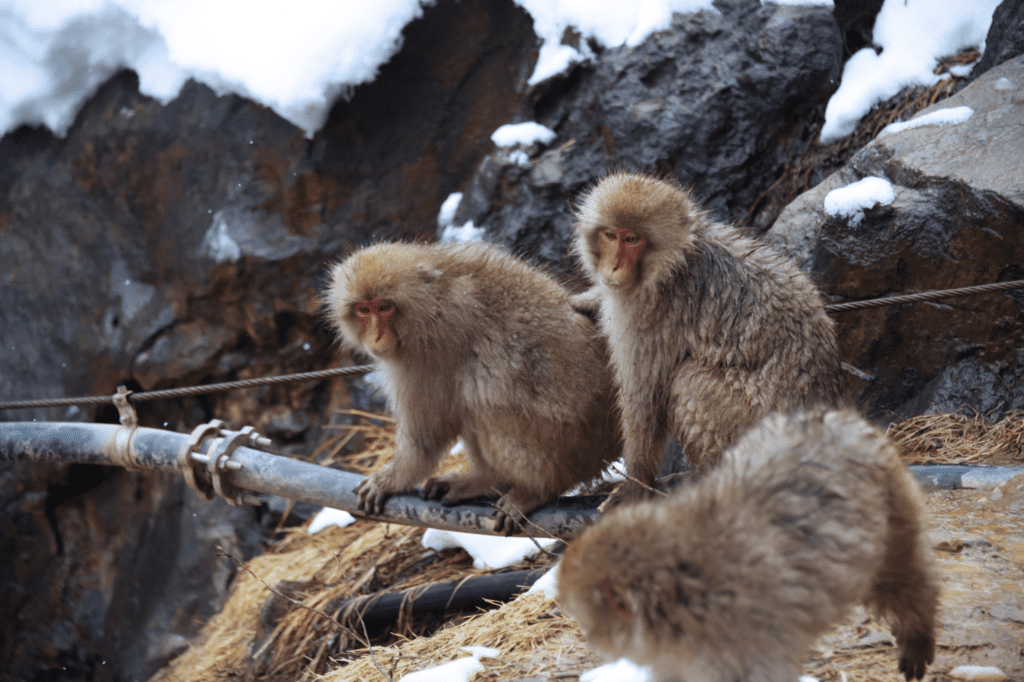
The interactions between the monkeys were super interesting. Many just relaxed in the water, while others preened and groomed each other. There was even a mother and child duo interacting when we arrived at the main onsen area.
The little one seemed hungry and even leaped down to the rocks around the pool to scream and throw a fit. It was a little funny, not gonna lie. Eventually though, the mama monkey picked up her whining child and fed it.
What is Jigokudani?
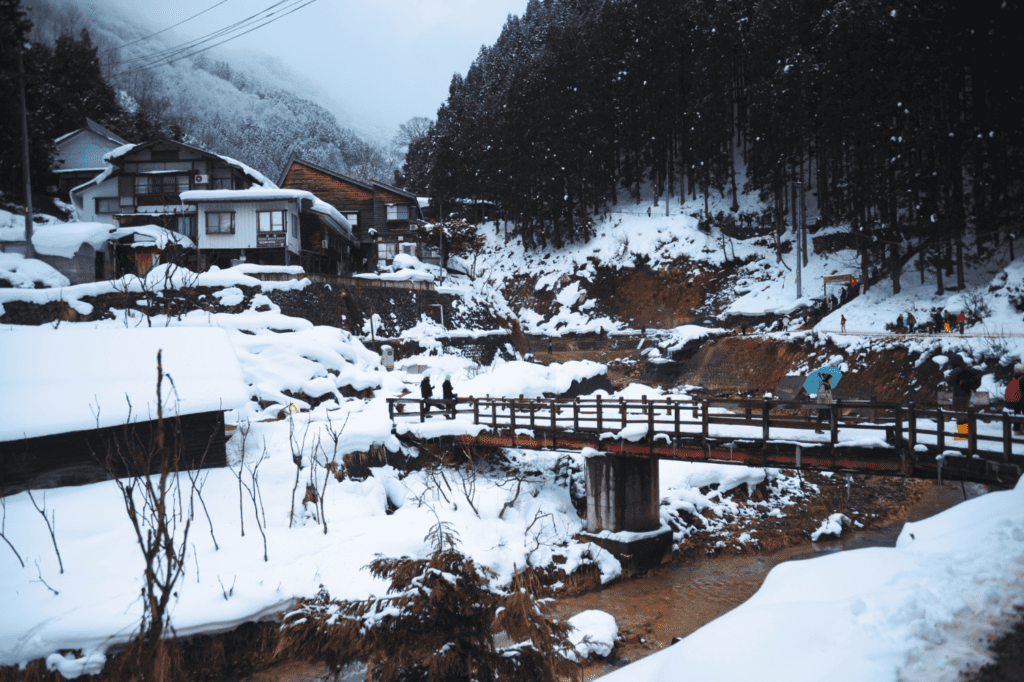
The monkey park’s official name is Jigokudani Yaen Koen, and features adorable “snow monkeys”, aka Japanese Macacques. Though these monkeys used to roam more freely across the mountainsides, they are most commonly found here in the valley nowadays.
Jigokudani literally means “Hell Valley”. While it’s a beautiful, scenic sight draped in white snow, it’s easy to understand where it gets its name.
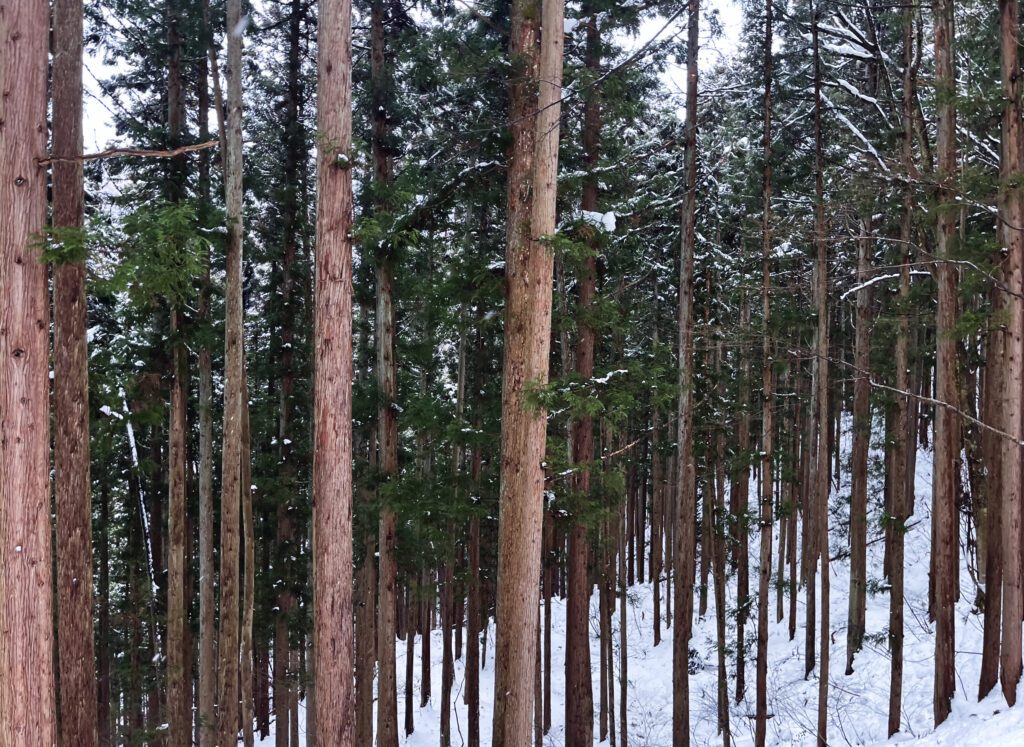
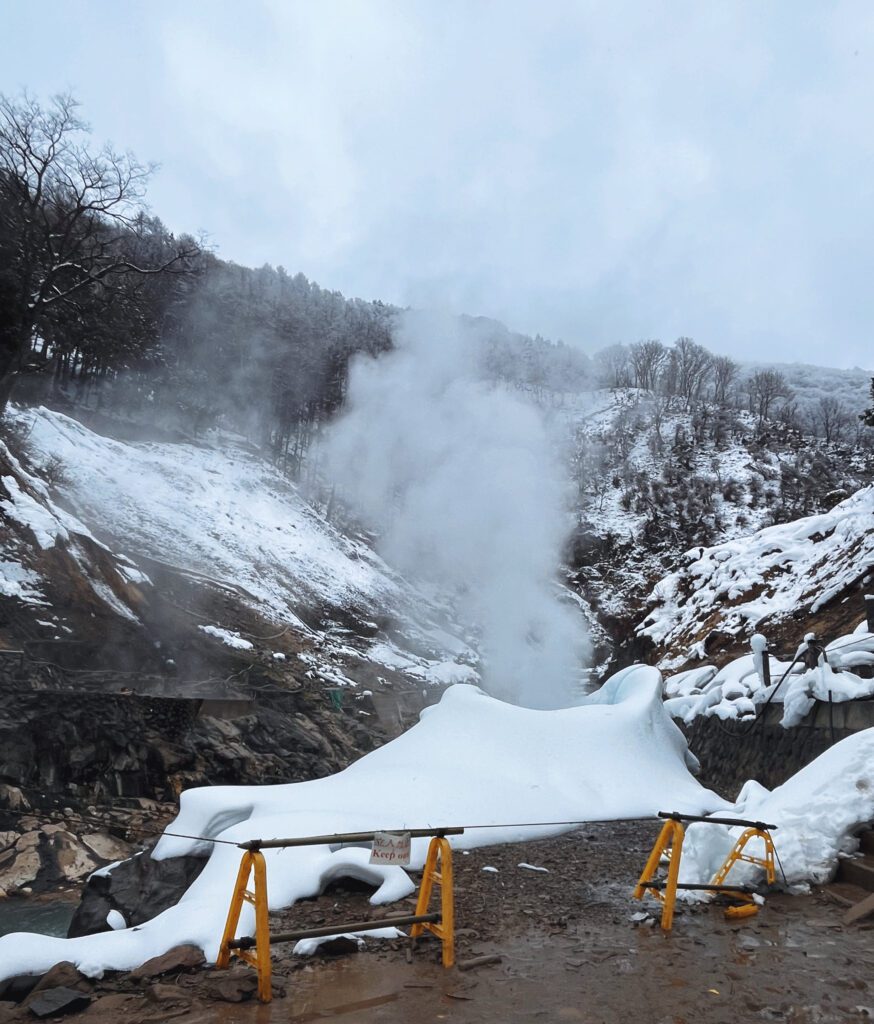
This popular area in Nagano prefecture rests on several natural hot springs. As a result, there are also many geysers that produce hot water and steam.
You can even smell the natural sulfurs, which, yes, smell like rotting eggs. It’s easy to imagine how such a place would seem hellish before modern conveniences.
Visiting the Hot Spring in Nagano
While you can opt to bathe in a pool with the monkeys, I personally wasn’t up to it. The idea of bathing with wild animals just sounded like an infection waiting to happen, no matter how cute they were.
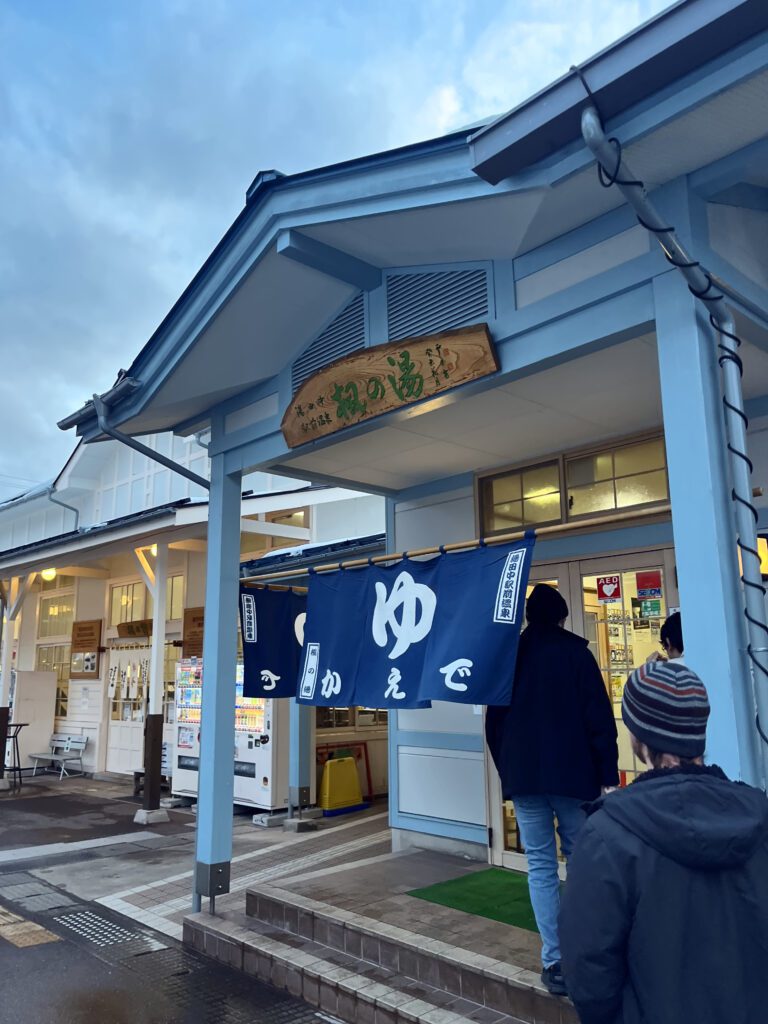
Instead, we chose to go to a local sentō, aka public bath. Kaede No Yu is the one we stumbled upon.
It was very local, with a small parking lot. And if I knew ahead of time that we were going to go in, I would’ve brought a change of clothes, or a towel, or anything really.
But despite not planning ahead, we were able to buy towels using the ticket machine. One of the indoor baths was absolutely scalding, but the rotenburo bath was much better.
It was relaxing, but I would’ve preferred to have brought my own shampoo and body wash.
Transit Access
If you want to visit the monkeys, there are indeed trains and buses that reach Jigokudani Yaen Koen. You can check the park’s website for more details.
We opted to drive since we don’t live too far, but if you’re visiting from out of the country, be sure to consider the travel time when making your itinerary.
And if you need any help with a first-time itinerary, check out my Japan Travel Guide.
Watch the Monkeys without Leaving Your Home
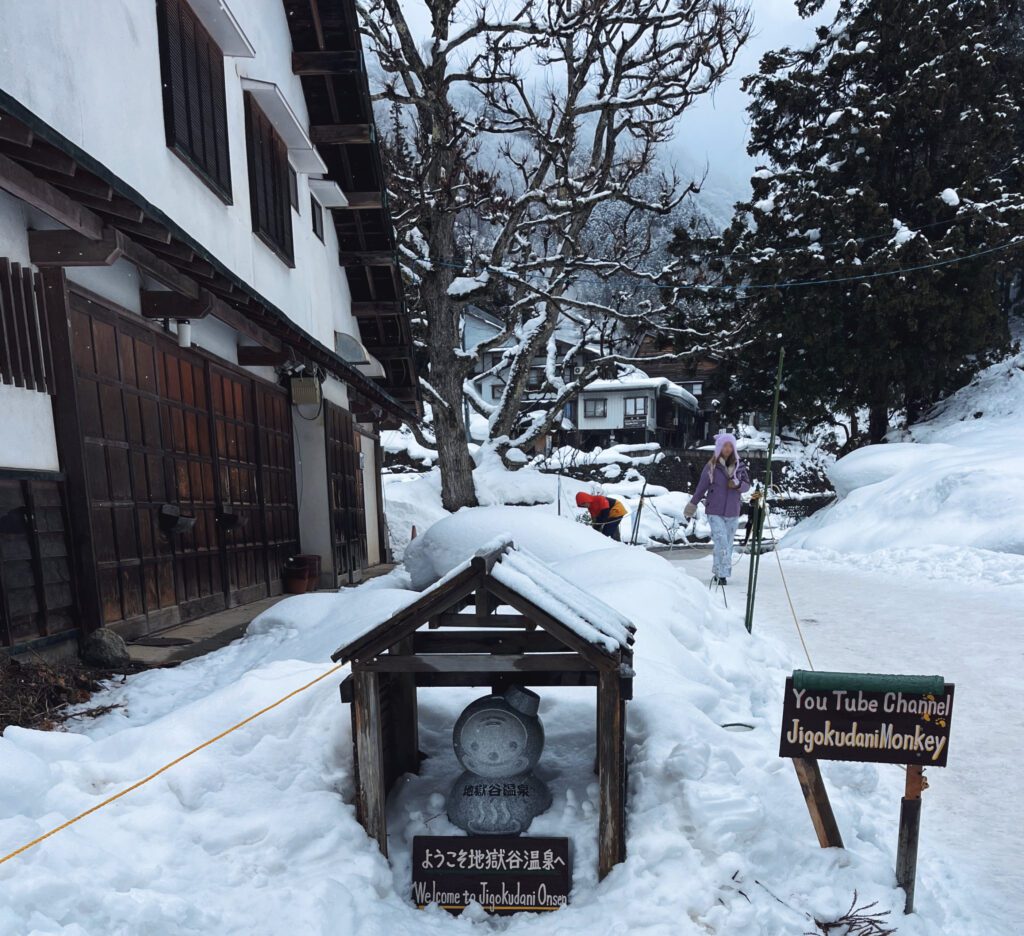
Even if you can’t get out to Jigokudani Yaen Koen just yet, you can watch the park’s YouTube channel from the comfort of home. Plus, they also run a continuous livestream of the onsen.
And don’t worry if you can’t make it out in winter, the monkeys actually live in the nature preserve all year round. Not to mention, the cherry blossoms and flowering plants are gorgeous there, especially around Lake Suwa (about two hours away by car).
And if you’re looking for more things to do in winter, check out my 6 Fun Things to do in Winter in Japan.